
Fear, Guilt, Shame, Anger, Oh My! Learning to Work With Money Without Letting It Run (or Ruin) Your Life
Money is numbers.
Until it isn’t.
A bank balance is a number.
A credit-card balance is a number.
Your paycheck is a number.
The price of the groceries is a number.
And yet very few of us experience money as nothing more than mathematics.
Money can make us feel safe.
Money can make us feel frightened.
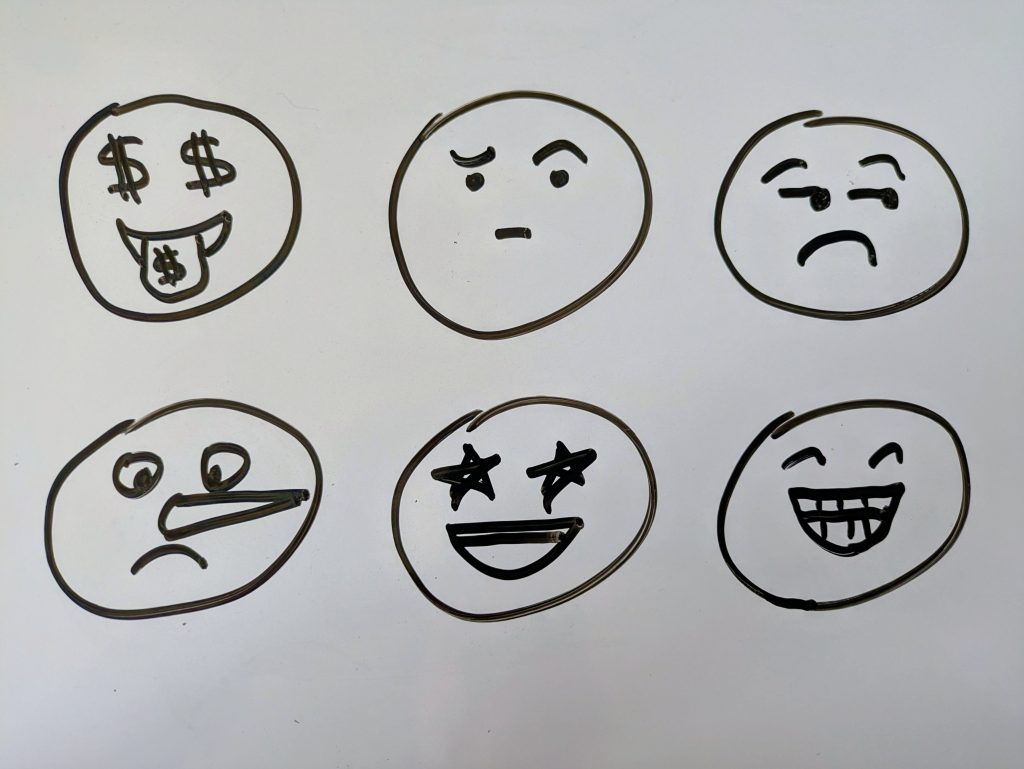
It can bring up guilt, shame, anger, envy, relief, pride, resentment, excitement, or even grief.
Sometimes all before breakfast.
That is why becoming financially stable requires more than learning how to add and subtract.
You also need to understand your emotional relationship with money.
Because if you don’t, your emotions can quietly start making financial decisions for you.
Start by Removing the Moral Judgment
One of the fastest ways to make money harder to manage is to turn every financial decision into a statement about who you are.
“I have debt, so I must be irresponsible.”
“I don’t have enough saved, so I failed.”
“I earn more than my family members, so I should help everyone.”
“I bought something I didn’t need, so I’m terrible with money.”
“I should have known better.”
There is an enormous difference between saying:
“I made a financial decision that did not work well.”
and saying:
“I am bad with money.”
The first statement gives you something to work with.
The second one gives you an identity to defend.
Money works much better when you can look directly at what happened without turning it into a trial about your worth as a human being.
Shame Makes You Hide
Shame loves secrecy.
It tells you not to open the statement.
Don’t look at the balance.
Don’t tell your spouse.
Don’t ask the question because you should already know the answer.
Don’t call the bank because that will be embarrassing.
Don’t admit that you don’t understand investing.
Just keep moving and hope somehow everything works itself out.
Unfortunately, money problems tend to grow very well in the dark.
You do not need to know everything.
You do need to be willing to look.
Open the statement.
Check the account.
Write down the number.
Ask the question.
Knowing what is happening financially is not punishment.
It is information.
And information gives you choices.
Fear Makes Everything Feel Urgent
Fear has a very particular effect on financial decision-making.
It makes everything feel like it needs to be solved immediately.
You have to pay off all the debt now.
You need to make more money now.
You need to find the perfect investment now.
You have to launch the business now.
You need to buy the thing before the opportunity disappears.
You have to say yes because what if nobody ever offers you work again?
This is one of the reasons I named this body of work Revenue Without Rush.
Urgency and good judgment are not the same thing.
Sometimes action really is required quickly.
Most of the time, though, financial stability is created through ordinary decisions repeated over time.
You don’t have to fix your entire financial life this week.
You do need to keep moving in a useful direction.
Guilt Can Make You Give Away Your Stability
Guilt around money can be surprisingly complicated.
Maybe you earn more than someone you love.
Maybe your parents struggled financially.
Maybe your children are having a hard time.
Maybe you believe having money when someone else does not means you are somehow selfish.
Giving can be a beautiful part of a financial life.
It has always been part of mine.
But giving becomes unhealthy when you continually destabilize yourself so that other people do not have to experience the consequences of their own financial choices.
You are allowed to help people.
You are also allowed to have boundaries.
You are allowed to save.
You are allowed to invest.
You are allowed to build financial security.
You do not need to apologize for creating a stable floor underneath your own life.
In fact, the stronger that floor becomes, the more choices you have about how and when you give.
Anger Is Information
Money can create some spectacular arguments.
People get angry when they feel controlled.
They get angry when they feel someone has spent irresponsibly.
They get angry when they are carrying more of the financial load than they expected.
They get angry when a partner will not talk about money.
They get angry when they discover something was hidden.
Sometimes people get angry with themselves.
Instead of immediately trying to get rid of the anger, listen to it.
Anger often tells you that something feels unfair, unsafe, ignored, or out of alignment.
It does not mean that every angry thought is correct.
It means there is information available.
Ask:
What is this anger trying to tell me?
Maybe you need a boundary.
Maybe you need better information.
Maybe an agreement needs to change.
Maybe you need to admit that a financial arrangement is no longer working.
The emotion does not have to make the decision.
But it may help you discover which decision needs your attention.
Be Precise About Money
Years ago, in one of my Practical Mystic episodes, I talked about Cheerful Cooperation with Cash.
The idea was simple:
Tell the truth about the money.
If you saved $36, don’t say you saved $40.
If something cost $127, don’t mentally round it down to $100 because that number feels better.
If you owe $8,432, don’t keep saying, “It’s about eight thousand.”
This may sound ridiculously small.
It isn’t.
When we repeatedly soften or distort financial numbers, we make it harder to trust ourselves.
Precision is calming.
You don’t need drama around the number.
You simply need the number.
Then you can decide what to do with it.
Ask Yourself What You Actually Want
Another question I have taught for years sounds simple but can be emotionally charged:
What do I want?
With money, the question becomes even more useful.
What do you actually want money to do for you?
Do you want to feel safer?
Do you want to leave a job?
Do you want to stop worrying about retirement?
Do you want to travel?
Do you want to support your children?
Do you want to create a business?
Do you want enough money in savings that a broken water heater is irritating rather than frightening?
Do you want to give more?
Do you want time?
Do you want freedom?
Money itself is rarely the final destination.
Money is a tool we use to support something else.
If you don’t know what that something is, it becomes very easy to chase more money simply because “more” sounds like the correct answer.
Your Emotions Are Real; They Are Not Always Instructions
This distinction matters.
You may feel afraid.
That does not automatically mean you should stop.
You may feel excited.
That does not automatically mean you should buy.
You may feel guilty.
That does not automatically mean you should give.
You may feel angry.
That does not automatically mean you should confront someone immediately.
You may feel ashamed.
That certainly does not mean you should hide.
Emotions are valuable information.
But they are not always instructions.
Sometimes the most useful thing you can do is acknowledge what you feel, let the intensity settle, and then ask:
What will actually help me now?
Maybe you need to look at the account.
Maybe you need to go for a walk first.
Maybe you need to gather information.
Maybe you need to sleep before making the purchase.
Maybe you need to have a conversation.
Maybe you simply need to stop staring at the same spreadsheet for the evening.
Then you can return to the money from a steadier place.
Build Evidence That You Can Trust Yourself
Self-trust with money does not arrive because you tell yourself you’re good with money.
It grows from evidence.
You said you would transfer $25 into savings, and you did.
You said you would look at the credit-card balance, and you looked.
You said you would wait 24 hours before buying something, and you waited.
You said you would stop adding new debt while paying down the old debt, and you made progress.
You said you would invest every month, and you kept doing it.
These small acts matter.
Each one says:
I can make an agreement with myself and keep it.
That is a very different financial life from one controlled by panic, guilt, avoidance, or shame.
You Don’t Need to Love Money
I don’t think the goal is to become obsessed with money in a more positive direction.
You do not have to wake up every morning chanting affirmations about cash.
You do not have to make money the center of your life.
You simply need to develop a relationship with it that is functional, truthful, and useful.
Money needs to be something you can look at.
Talk about.
Direct.
Save.
Spend.
Invest.
Give.
And occasionally make mistakes with.
Without turning every one of those actions into an emotional referendum on whether you are doing life correctly.
The Goal Is Harmony
I use the word harmony deliberately.
Financial life is not static.
There will be seasons when expenses rise.
There will be times when savings need to be used.
There will be opportunities worth investing in.
There will be mistakes.
There will be moments when you need to change course.
Harmony does not require every part of your financial life to be equal.
It means the different parts are working together rather than constantly fighting one another.
Your present life matters.
Your future matters.
Your emotions matter.
Your numbers matter.
Your generosity matters.
Your stability matters.
The work is learning how to let all of those things exist together.
That is financial footing.
Not perfection.
Not control.
And certainly not shame.
Just a stronger floor beneath you so that when you ask yourself, “What comes next?”
you have enough stability to listen to the answer.
Listen
Cheerful Cooperation with Cash
In this short episode of The Practical Mystic Show, I talk about one of the simplest ways to improve your relationship with money: tell the truth about the numbers.
No exaggerating.
No rounding things in whatever direction makes us feel better.
Just clarity.
Clarity on Cash
This episode begins with an emotionally loaded question:
Do I actually want to be rich?
It is an invitation to get clearer about what you want money to do in your life rather than simply chasing “more.”
Embed from: The Practical Mystic Show — Ep0015: Clarity on Cash
Continue the Journey…
If debt is currently the loudest issue in your financial life, start with Ditch Your Debt While Banking Bucks.
And if you are working through the Revenue Without Rush framework, this teaching belongs in Level 1: Financial Footing—building the floor that allows everything else to become possible.
This material is educational and is not individualized financial, investment, tax, or legal advice.
This article is part of Revenue Without Rush — Level 1: Financial Footing.
If you’re ready to build a stronger financial floor without shame, pressure, or rushing, explore Revenue Without Rush and see where you fit.