
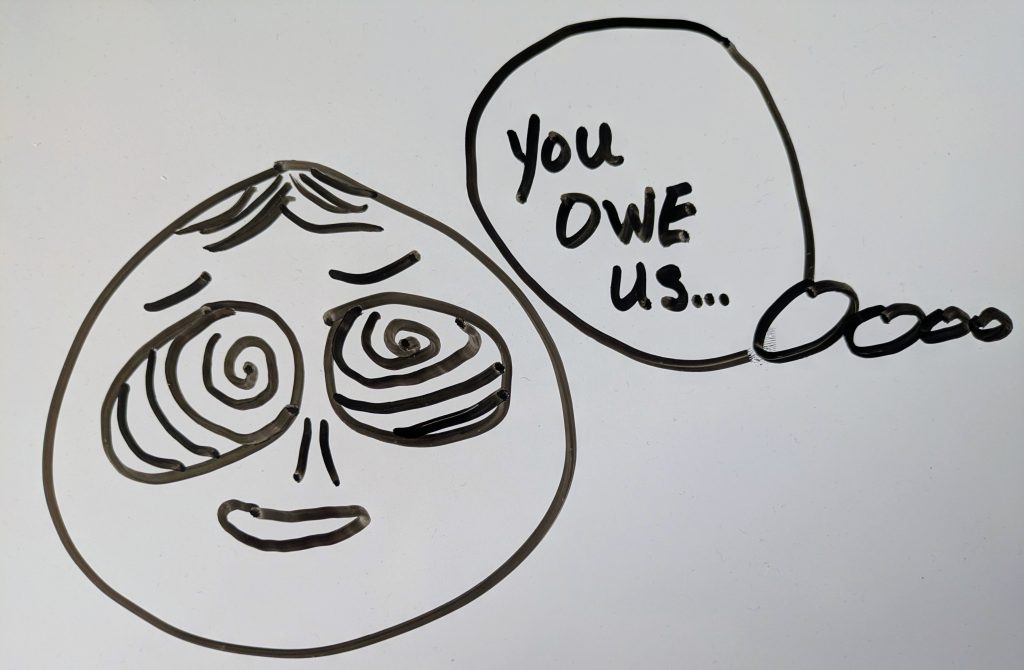
Reduce What You Owe Without Making Debt Your Whole Financial Life
There is a point in almost every conversation about debt when somebody says something like:
“I just want it gone.”
I understand.
Debt can feel heavy. It can be embarrassing. It can make you feel as though every financial decision you have ever made is sitting there on a statement judging you.
So people often decide they are going to attack it.
Every extra dollar goes toward the debt.
Every purchase gets scrutinized.
Every small pleasure suddenly requires justification.
They check the balances constantly.
They calculate and recalculate.
And before long, getting out of debt has become another full-time job.
I don’t think it needs to be that way.
Debt is a financial situation that needs your attention.
It does not deserve your obsession.
Start With the Truth, Not the Story
Before you can change your debt, you need to know what you actually owe.
Not approximately.
Not, “I think it’s around…”
Not, “I don’t even want to look.”
Get the statements.
Write down the balances.
Write down the minimum payments.
Write down the interest rates.
Then total it.
That number may make you uncomfortable.
That is okay.
The number is information.
It is not a character evaluation.
You may have accumulated debt because of overspending. You may also have accumulated it through a job loss, divorce, medical expenses, caring for family, starting a business, reduced income, an emergency, or simply not knowing then what you know now.
You can learn from how you got here without turning the lesson into punishment.
The question is no longer:
“How could I have let this happen?”
The useful question is:
“This is where I am. What do I do next?”
Do Not Make Debt the Only Job Your Money Has
This is where the 60/40 Rule of Money Management becomes so important.
One of the patterns I watched for years was people sending every available dollar toward debt.
Then life happened.
The car broke.
A child needed something.
The furnace quit.
There was no cash available because all the extra money had gone toward debt.
So the unexpected expense went right back onto the credit card.
The problem wasn’t a lack of commitment.
The problem was that there was no financial floor underneath the debt-reduction plan.
That is why I teach people to build savings while reducing debt.
Some of your money needs to address what you owe.
Some of your money needs to help make sure you do not have to borrow again the next time ordinary life throws you a curveball.
You are doing two things at once:
reducing yesterday’s financial pressure while strengthening tomorrow’s financial stability.
That may feel slower at first.
It is often far more sustainable.
Choose a Debt to Work On
Once you know what you owe, choose where your extra debt-reduction money is going.
You do not need to emotionally attack every balance at once.
Keep making the required payments on your obligations, then deliberately direct your additional debt-reduction money toward the debt you have chosen to address first.
There are different ways people choose that target.
Some want the smallest balance gone first because seeing an account disappear gives them momentum.
Others focus on the debt costing them the most in interest.
Still others have one particular debt that creates so much emotional noise that eliminating it first gives them tremendous relief.
The important thing is that you make a decision.
Then stop renegotiating that decision every three days.
Let the system work.
Stop Feeding the Problem Where You Can
Paying off debt while continually adding new debt is exhausting.
Sometimes additional debt truly cannot be avoided.
Life can get very real, very quickly.
But where you do have choices, start noticing the behaviors that keep the cycle moving.
Are you spending money before it arrives?
Are you using credit because you have no emergency savings?
Are you buying something because you genuinely want it or because you are trying to change how you feel?
Are recurring expenses quietly consuming more of your income than you realized?
Are you maintaining a lifestyle that belonged to a higher-income season of your life?
You do not need to answer those questions with shame.
Answer them with curiosity.
You are gathering information about your own behavior.
And information gives you choices.
Let Progress Be Boring
Financial recovery is not particularly glamorous.
Most of it consists of small actions repeated for a surprisingly long time.
You make the payment.
You move some money into savings.
You make another payment.
You skip adding another balance.
You make another payment.
You deal with an unexpected expense without putting all of it onto a card.
Then one day you realize something has changed.
The balance that used to frighten you is much smaller.
Your savings account has money in it.
You are no longer checking your accounts with the same knot in your stomach.
There wasn’t one dramatic moment.
You simply kept going.
This is one of the reasons I prefer harmony over the idea of perfect financial balance.
Your financial life will constantly require adjustment.
Some months more money will need to go toward the present.
Other months you can make greater progress on the future.
You are navigating.
You are not failing every time you need to correct course.
Watch the Direction, Not Just the Balance
If you owe $20,000 and reduce it to $19,000, you still owe $19,000.
It can be tempting to look at that number and think:
“I have so far to go.”
But that is not the only thing that happened.
Perhaps during that same period you also put $500 into savings.
Now you have less debt and more reserves.
Your financial position improved in two directions.
That matters.
One of the most damaging habits in debt reduction is refusing to acknowledge progress until the entire debt is gone.
Celebrate movement.
Not with another shopping spree.
But with recognition.
You are learning how to steward your money differently.
What Happens When the Debt Starts Disappearing?
Something interesting happens when debt is no longer consuming so much of your attention and income.
Space appears.
There is financial space because fewer dollars are committed to old purchases.
But there is also mental space.
You aren’t carrying the same constant calculation in the back of your mind.
You aren’t trying to remember which card has room on it.
You aren’t wondering which payment can be delayed.
You aren’t using as much energy managing financial emergencies.
That space gives you choices.
And choices are what we are really trying to build.
The goal is not simply to get a statement that says $0.00.
The goal is to create a financial life where you have room to decide what happens next.
When a Debt Is Paid Off, Do Not Lose the Money
This is an important moment.
Suppose you have been paying $300 a month toward a debt and finally pay it off.
Congratulations.
Now you have $300 a month that no longer belongs to that creditor.
It is very easy for that money to quietly disappear back into everyday spending.
Don’t let it.
Give it another job.
Perhaps some goes toward the next debt.
Perhaps some strengthens your emergency savings.
Perhaps some begins going toward retirement, investing, income-producing assets, or something you are creating.
The payment does not disappear.
It graduates.
That is how paying off debt begins building wealth.
You Do Not Have to Fix Your Entire Financial Life This Month
This may be the most important part.
Urgency is not always useful.
If you have spent years accumulating debt, you are allowed to spend some time developing the habits that will keep you from returning to it.
Learn your numbers.
Build some reserves.
Reduce what you owe.
Pay attention to your behavior.
Adjust when life requires it.
Then keep going.
Debt does not need to become your hobby.
It does not need to dominate every dinner conversation.
It does not need to become a reason to postpone living your life.
Give it a place in your financial system.
Give it money.
Give it attention.
Give it a plan.
But do not give it your identity.
You are building a floor.
Every payment strengthens it.
Every dollar saved strengthens it.
Every time you make a deliberate decision rather than a frightened reaction, you strengthen it.
There is no need to rush.
There is simply a direction to travel.
Listen
Handling Your Current Debt Load — Three Minute Money Tip
A short conversation about facing your current credit-card debt and beginning from the numbers you actually have.
Experiencing the Psychological Benefits of Debt-Free Living — The Janine Bolon Show
A short episode about coming to terms with your current debt load and the changes that begin as you move toward debt-free living.
Read Next
The 60/40 Principle of Money Management
Learn why I recommend building savings and financial stability while you reduce debt rather than making debt repayment the only job your money has.
Continue the Journey…
If debt is currently the loudest issue in your financial life, start with Ditch Your Debt While Banking Bucks.
And if you are working through the Revenue Without Rush framework, this teaching belongs in Level 1: Financial Footing—building the floor that allows everything else to become possible.
This material is educational and is not individualized financial, investment, tax, or legal advice.
This article is part of Revenue Without Rush — Level 1: Financial Footing.
If you’re ready to build a stronger financial floor without shame, pressure, or rushing, explore Revenue Without Rush and see where you fit.